Interim HR Leadership · HR Transformation · People Technology
"The strategy was solid, but something got lost between the plan and the execution."
If that sounds familiar, let's talk.
Why Leaders Call Me
"My People team doesn't have a knowledge problem. They know the strategy. They need someone who can help them get it done."
The business is moving faster than HR leadership can keep up with, or the person who was keeping up just left. Either way, there's a gap between what needs to happen now and who's there to drive it.
The platform went live. Something went wrong between the go-live and the way people actually work. Adoption didn't follow.
HR was restructured. The org chart changed. But the processes, the decisions, and the friction stayed exactly the same.
Your HR team know what needs to be done, but they can't build it. Too many ideas, no prioritization. People are automating their tasks, but not the end-to-end process.
These problems aren't failures of strategy. They're failures of delivery: the work between the decision and the outcome. That's the work SND Projects does.
My Areas of Delivery
Interim HR leadership and HR director cover when a role is vacant, a function is in transition, or a leadership team is forming. Keeping people processes running, representing People at the leadership table, and handing over cleanly. Or working inside the team alongside CHROs and CIOs to build capability and deliver outcomes.
Redesigning how HR is structured, how it delivers, and how it operates, from shared services to business partnering. Built around the business, not HR convention.
Bringing fragmented HR application estates under control, aligning regions to a single core, and running the transformation PMO that keeps multiple programmes on track. Platform optimization focused on adoption and outcomes, not just go-live.
Embedding agentic and workflow automation across HR processes, removing manual effort, improving decision quality, and making AI practical rather than promised.
My Approach
Start with what's actually happening, not what the last assessment said. Understand the operating model, the technology, the team, and what's genuinely blocking progress before recommending anything.
Strategy and execution in the same engagement. Working directly inside the organization, not through a team of consultants briefed at arm's length. What you see is what you get.
Engagements are designed to end. The output is a team that can run what was built without me. No retainer. No dependency. The measure of success is not needing to come back.
Who I Work With
Scaling fast and outgrowing the HR structures, systems, and processes that got you here. Need CHRO-level thinking and delivery without the overhead of a permanent hire.
Navigating post-acquisition integration, platform modernization, or HR transformation that hasn't delivered yet. Need execution experience, not another strategy layer.
Sectors
From pre-revenue start-ups to established enterprises, the problems are different. The discipline is the same. A sample of the organizations and sectors I've worked with.
High-growth, tech-native, scaling or transforming faster than HR can keep up.

Complex multi-country operations, regulated environments, non-tech end-user population.

Fast-moving environment, no HR foundations, leadership stretched across every function.
Mission-led, resource-constrained, HR that has to do more with less.
My Results
AI-Enabled People Technology · High-Growth SaaS
Peer feedback rebuilt where engineers already worked: Slack, with Workday quietly behind it.
The Situation
Peer feedback ran once per performance cycle. Participation sat at 50%. The problem wasn't culture. The formal process made it painful. Reviewers couldn't see what they owed. Managers copied responses by hand. Eight weeks to the next cycle.
What Was at Stake
The core HR system wasn't going to be replaced, and shouldn't be. The question was whether peer feedback could be made to work without another platform programme, and at the pace the business expected.
What was Delivered
The feedback experience was rebuilt inside Slack, where engineers already worked. The core HR system stayed in place. AI handled the structured summaries. The data went back to Workday automatically. Participation: 50% → 93%. Reviews submitted: 400 → 1,600+. Live in 8 weeks.
People Technology Transformation · High-Growth SaaS
A People Technology function set up to lead in a company still moving fast.
The Situation
A fast-scaling SaaS company needed its People Technology function to keep pace with the business. Workday was live and a capable team was in place, but demand on both was growing faster than the structure around them.
What Was at Stake
People systems had to scale with the company. The business needed confidence that People Technology could lead, not just maintain.
What was Delivered
Stronger leverage of Workday across core processes. Leadership and direction for the team. Vendor and application management brought to a higher level, with consistency in how decisions were made and work was delivered. AI-enabled automation moved from concept into production.
Post-Acquisition Workforce Integration · Global Logistics Enterprise
Two businesses became one, without losing operational stability or the people that made either worth acquiring.
The Situation
A major global logistics company acquired one of its largest European competitors. Two strong cultures. Neither designed to become the other. The acquirer ran on standardized, centralized systems. The acquired business was the opposite: fragmented, legally distinct entities across Europe.
What Was at Stake
An integration across dozens of countries, complex labour frameworks, European Works Councils, and tens of thousands of employees could not afford to fail operationally. Disruption wasn't just an HR risk. It was a business risk.
What was Delivered
Operating models, leadership structures, and workforce frameworks were aligned, built on compromise where needed, standardization where it worked, and genuine cultural integration where it mattered. The HR systems estate was brought under control across 32 countries: a fragmented, multi-country application landscape consolidated into a single system of record ahead of a phased Workday rollout. The result was one organization, one operating model, and a workforce that understood what had changed and why.
About
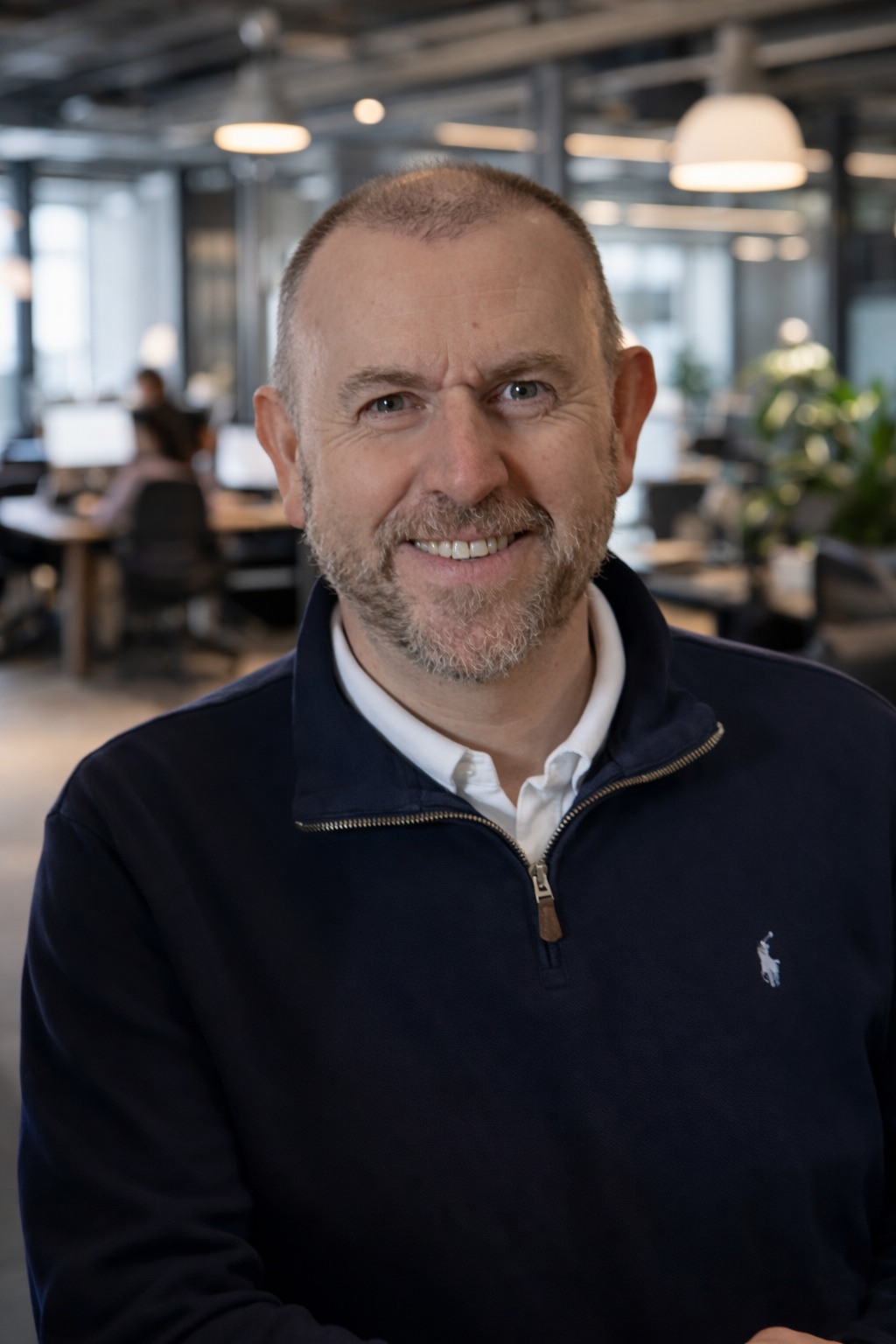
Sean Dixon founded SND Projects in 2024 to work directly inside organizations rather than advise from a distance. The focus is the work that actually matters: HR transformation, People Technology, and AI that works in practice, not just in pitch decks.
Sean built his HR career at FedEx, across every dimension of the function: org design, service delivery, reward, workforce planning, HR systems and employee relations, including chairing the EU-level Works Council for FedEx Europe. That progression culminated in VP HR Europe, across 32 countries and through one of Europe's largest post-acquisition integrations. Most of that complexity sat at country and legal entity level, where populations typically ran 500 to 2,000. The same scale most organizations operate at, done thirty-two times over.
SND Projects brings that experience directly to the work, as interim leader or hands-on advisor. No junior team. No arm's-length delivery. And where a project calls for it, Sean draws on a network of trusted specialists and thought leaders built over 25+ years in the field.
2001
FedEx: HR leadership
UK, Ireland, Nordics and EMEA
2015
Director Org Design & HR Systems EMEA
Workday HCM implementation · post-acquisition architecture
2021
Vice President HR Europe
32 countries · major acquisition integration · multi-jurisdiction
2024
Founded SND Projects
Interim HR leadership · HR transformation · People Technology · AI enablement
2025
Head of People Technology (Interim), Miro
Workday leverage · team leadership · vendor and application management
A straightforward conversation. No intake form, no deck, no proposal before we've spoken. Just a direct discussion about the problem and whether this is the right fit.
Get in Touch connect@sndprojects.eu